Showing posts with label omg. Show all posts

Wednesday, October 8, 2014

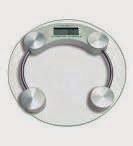
THE WEIGHING SCALE CONCERNS

Hi guys today in this review I try and analyze certain issues that are pertinent to weigh ins.hope you find them relevant.

1. Always use the same scale - each scale will weigh you a little differently. It is best to use a private scale - gym scales tend to be inaccurate due to overuse.CALIBRATE your scale once a while by weighing a fixed known weight like a dumbell


2. Weigh yourself once or max 3 times a week and at the same time (example: every Wednesday morning after waking, it does not have to be exactly 9:02 am every time). Weighing yourself every week, or up to three times a week, is much better than weighing
yourself daily, because weight can fluctuate throughout the day due to fluid changes. Use a chart to track your progress.


3. Weigh yourself first thing in the morning after you have used the bathroom. For the most accurate reading, weigh yourself without clothing or wear the same thing every time.well for most people it is best to get on the scales first thing in the morning, before you’ve eaten or drank anything and after you’ve been to the toilet. 


4. Do not weigh yourself if you are menstruating.  Women hold a lot of extra water weight at this time and you will get an inaccurate reading.

5. your weigh in is inappropriate if:


  •   you had heavy booze the night before
  •   you had fluids or caffeine before weigh in 
  •   you are a night worker weighing in the morning
  •   you had eaten in the middle of the night


6. Make sure you are standing up straight with your weight evenly distributed on the scale.

7. Make sure the scale is resting on a firm and flat surface.weighing with the scale on the carpet can have erroneous readings to the tune of 17 percent.

8. Stand still while the machine gets the proper reading.


9. Do not weigh yourself multiple times per day. Weight can fluctuate 1-2.5 kilograms  from morning to evening.Weight fluctuations are normal, and they happen to everybody. They can be caused by many different factors, such as consumption of a big meal, excess salt intake, water retention, constipation and hormonal changes. you should know is that the extra weight that you see on the scale does not come from an increase in body fat; it can be water, waste products or other substances that are temporarily present in your body. 

Sunday, September 28, 2014

TOP OBESITY MYTHS BUSTED

OVEREATING IS THE PRIMARY CAUSE OF OBESITY :
Fact: Of the  various dietary and physical activity variables examined in this cross-sectional study, insufficient vigorous physical activity was the only risk factor for higher body mass index for adolescent boys and girls. So the under activity rather rather over eating is the cause of obesity. 

OVER WEIGHT DUE TO SLOW METABOLISM:
Fact: Studies have shown that resting metabolism - the number of calories used by the body at rest – actually INCREASES as people become heavier. In other words, the larger you are the more calories you use to keep your body going.
Being fit and increasing your lean muscle tissue is one way to increase your metabolism. Essentially, the fitter you are, and the more lean muscle mass you have, the more calories you burn both at rest and during exercise – thus making weight maintenance and weight control easier.

RAPID WEIGHT LOSS :
Fact:  myth is that large, rapid weight loss is associated with poorer long-term weight-loss outcomes, as compared with slow, gradual weight loss.the trials have shown that
more rapid and greater initial weight loss has been associated with lower body weight at the end of long-term follow-up.

SKIPPING A MEAL:
Fact: Eating three meals a day can actually prevent obesity. Skipping meals slows down metabolism as the body tries to reserve its energy stores for daily function; it increases the likelihood of overeating or binge eating later in the day. 

SPOT REDUCE:
Fact: It is not possible to train a specific muscle group to spot reduce the fat surrounding it. Burning fat requires cardiovascular exercise and a proper nutrition plan.so by exercise for a particular spot one can just add muscle mass and not cut fat. Reducing fat is a pan body phenomenon and not local.

BODY FAT IS BAD :
Fact: Body fat is required for the organs to function properly, for strong bones, good cognitive ability, and reducing the risk for a heart attack. Body fat itself is not bad. The type of fat and where the fat is deposited is important.

BEER BELLY:
 Fact:The main source of calories in any alcoholic beverage is alcohol.You are drinking it in more quantities than wine or liquor, so you tend to have more caloric intake.” .“You are talking about a difference between several hundred calories a night and a couple hundred.” Follow the logic here and if the average lush consumed wine in greater quantities than beer, the colloquialism would be “wine belly” .

WEIGHT GAIN IN WOMEN IS A NATURAL AGEING PROCES:
Fact: Weight gain of more than 20 pounds is not a normal part of the maturation process. It may actually increase a woman’s risk of an obesity-related disease.

Tuesday, August 19, 2014

INSIGHTS INTO WEIGHT..


Weight is defined as the force exerted by a body due to gravity.The mechanisms involved in weight regulation in humans include genetic,behavorial,social and physiological factors.The stability of body weight and body composition requires that energy intake matches energy expenditure.which way the balance shifts in a continous FIGHT.
Like any other natural entity, human body must obey physical laws, according to which energy cannot be created nor destroyed, but only transformed. Consequently, all excess energy introduced causes an increase of adipose tissue, which is always accompanied by an increase of lean body mass, and thus an increase of body weight weight gained or lost by a person with normal body weight is composed of two-thirds adipose tissue and one-third lean body mass.
How long does it take to gain or lose a kilogram? It evidently depends on how many Calories are cumulatively necessary to build a new kilogram of body weight and, vice versa, on how many Calories are provided by the demolition of one kilogram of existing body weight. The energy cost of adipose tissue and lean body mass correspond to about 10,000 and 2,000 Cal/kg, and the energy yield to about 7,500 and 800 Cal/kg, respectively. Therefore, energy cost and yield of one kilogram of weight with the above-mentioned composition (two-thirds adipose tissue and one-third lean body mass) are equivalent to about 7,000 and 5,400 Calories, respectively.so if one has to shed 5 kgs (35000 calories) one can theoretically loose it in 35 days with a calorie deficit of 1000 calorie per day. However, energy balance is positive or negative by 100 Cal/day only initially, then it gradually reduces because the body energy expenditure changes according to the consumption of the weight gained or lost. Times for gain or loss are consequently lengthened. However, 75% of the total weight is gained or lost in little more and little less than one year, respectively.

Let's get started